
MARTIAL ARTS
MARTIAL
ARTS
INTRODUCTION

Circle Dojo Martial Arts System is based on ten

Circle Dojo Martial Arts System is based on ten solo forms (routines) and their practical applications for sparring and self-defence.
1. Empty Hand {unarmed}
2. Weapons {armed}
The empty hand forms are based on five animals and their natural fighting prowess used to fight and hunt in the wild. These skills are adapted to the human body and anatomy to be used as weapons of attack and defense.
The animal fighting styles in martial arts emulate the physical mechanics, tactics and combat mindsets of animals. The animal forms taught at Circle Dojo include footwork and stances, various hand striking techniques, soft and hard defensive skills, basic grappling, ground positions mobility and striking.
The animal forms are direct, deceptive, and destructive all at once. They shift ranges, levels, and angles swiftly by using a combination of long-range kicks, md-range hand strikes, and close quarter elbows, knees, and sweeps.
The Circle Dojo weapon forms are complimentary to the animal forms and represent four main groups including long range, short bladed, paired/twin and soft/linked weapons. Weapons training is a great way to strengthen joints and tendons whilst learning new skills to sharpen your focus, co-ordination and agility.
Empty Hand:
- Kata One
- Great Ape
- Hungry Tiger
- Coiled Snake
- Leaping Leopard
- Fighting Crane
- Long Staff
- Double Dragon Sticks/Swords
- Single Broadsword
- Nunchaku


getting started
1. Sturdy sport shoes and comfortable clothing for exercise.
2. Boxing gloves or MMA fingerless gloves
3. 1 x thick exercise mat.
4. Water bottle and towel.
$120 = 2 x 60-minute sessions {paid in advance}
24-hour notice required via text for any cancellation or change of session times to keep credit.
Sydney Park Cycling Centre 410 Sydney Park Road, Alexandria NSW 2015
– short walk from St. Peters station
– parking available
Please advise the trainer if you have any illness, injury, physical pain, or discomfort prior to commencing training. If you are unsure about your ability to exercise safely, please consult your doctor or healthcare professional.
CIRCLE DOJO FIVE ANIMALS


CIRCLE DOJO WEAPONS
BENEFITS
OF MARTIAL ARTS TRAINING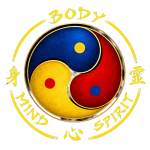
The Chinese characters in the image correspond directly to the English words Body, Mind, and Spirit surrounding the symbol.
Here is the exact breakdown from left to right:
• 身 (shēn): Means Body, physical form, or health.
• 心 (xīn): Means Mind, heart, or consciousness.
• 靈 (líng): Means Spirit, soul, or divine essence (written in traditional Chinese).
Together, they form a well-known triad representing the holistic connection and balance between a person’s physical, mental, and spiritual well-being.
Martial arts training delivers complete physical conditioning and mental growth. Unlike
standard gym routines that isolate single muscle groups, it combines full-body
movement, strategic thinking, and emotional discipline.
Physical Benefits of Martial Arts Training
Cardiovascular & Metabolic Fitness:
Sessions function like high-intensity interval training (HIIT), burning up to 500 calories
per hour, improving heart health, and lowering resting heart rate and blood pressure.
Strength & Muscle Tone:
Stances, strikes, throws, and bodyweight conditioning build functional power across the
arms, legs, core, and back.
Flexibility & Mobility:
Dynamic kicking, twisting, and stretching routines increase range of motion and reduce
injury risks.
Balance & Coordination:
Footwork drills and spatial awareness exercises sharpen proprioception and physical
stability.
Quicker Reflexes:
Constant sparring and partner drills shorten reaction times both on the mats and in daily
life (such as driving).
PHYSICAL BENEFITS OF MARTIAL
ARTS TRAINING
Sessions function like high-intensity interval training (HIIT), burning up to 500 calories
per hour, improving heart health, and lowering resting heart rate and blood pressure.
Stances, strikes, throws, and bodyweight conditioning build functional power across the
arms, legs, core, and back.
Dynamic kicking, twisting, and stretching routines increase range of motion and reduce
injury risks.
Footwork drills and spatial awareness exercises sharpen proprioception and physical
stability.
Constant sparring and partner drills shorten reaction times both on the mats and in daily
life (such as driving).
mental & psychological BENEFITS OF MARTIAL
ARTS TRAINING
High-concentration drills require mindfulness, thus clearing mental bandwidth of
external worries and releasing mood-boosting endorphins.
Complex patterns, forms, and defensive combinations stimulate brain regions linked to
attention, decision-making, and self-control.
Sparring and high-pressure situations teach practitioners how to stay calm, control
temperaments, and de-escalate conflict.
Overcoming physical fatigue and mastering difficult techniques builds a deep sense of
personal empowerment and grit.
Structured dojo routines cultivate consistency, patience, and mutual respect toward instructors and peers.
MARTIAL
MORALITY "Wude"Traditional Chinese schools of martial arts, such as the famed Shaolin monks, often dealt with the study of martial arts not just as a means of self-defense or mental training, but as a system of ethics.
Wude (武 德) can be translated as “martial morality” and is constructed from the words wu (武), which means martial, and de (德), which means morality. Wude deals with two aspects; “Virtue of deed” and “Virtue of mind”.
TWO ASPECTS of
WUDE
Wude is split into two primary categories that govern outward behavior and inward character.
VIRTUE OF
DEED
Virtue of deed concerns social relations; morality of mind is meant to cultivate the inner harmony between the emotional mind (心; Xin) and the wisdom mind (慧; Hui). The ultimate goal is reaching “no extremity” (無 極; Wuji) – closely related to the Taoist concept of wu wei – where both wisdom and emotions are in harmony with each other.
謙 谦
誠 诚
禮 礼
義 义
信
謙 谦
誠 诚
禮 礼
義 义
VIRTUE OF
MIND謙 谦
忍
恆
毅
志
勇
忍
恆
毅
志

Circle Dojo Martial Arts System is based on ten solo
